· Ernie Braganza · Blog article · 4 min read
A Federal Master List Will Deny Citizens the Vote
The traditional strength of American elections has always been its decentralization. Creating a national master list of eligible voter is doomed to failure and is an attempt to deny the vote to vunerable populations.
Last updated: July 15, 2026
The traditional strength of American elections has always been its decentralization. By distributing the administration of elections across thousands of counties and fifty states, the system has remained resilient to both fraud and large-scale cyber-attacks. However, current executive and legislative efforts, including the SAVE Act and recent executive orders, aim to dismantle this architecture in favor of a top-down, nationalized model that creates a dangerous single point of failure.
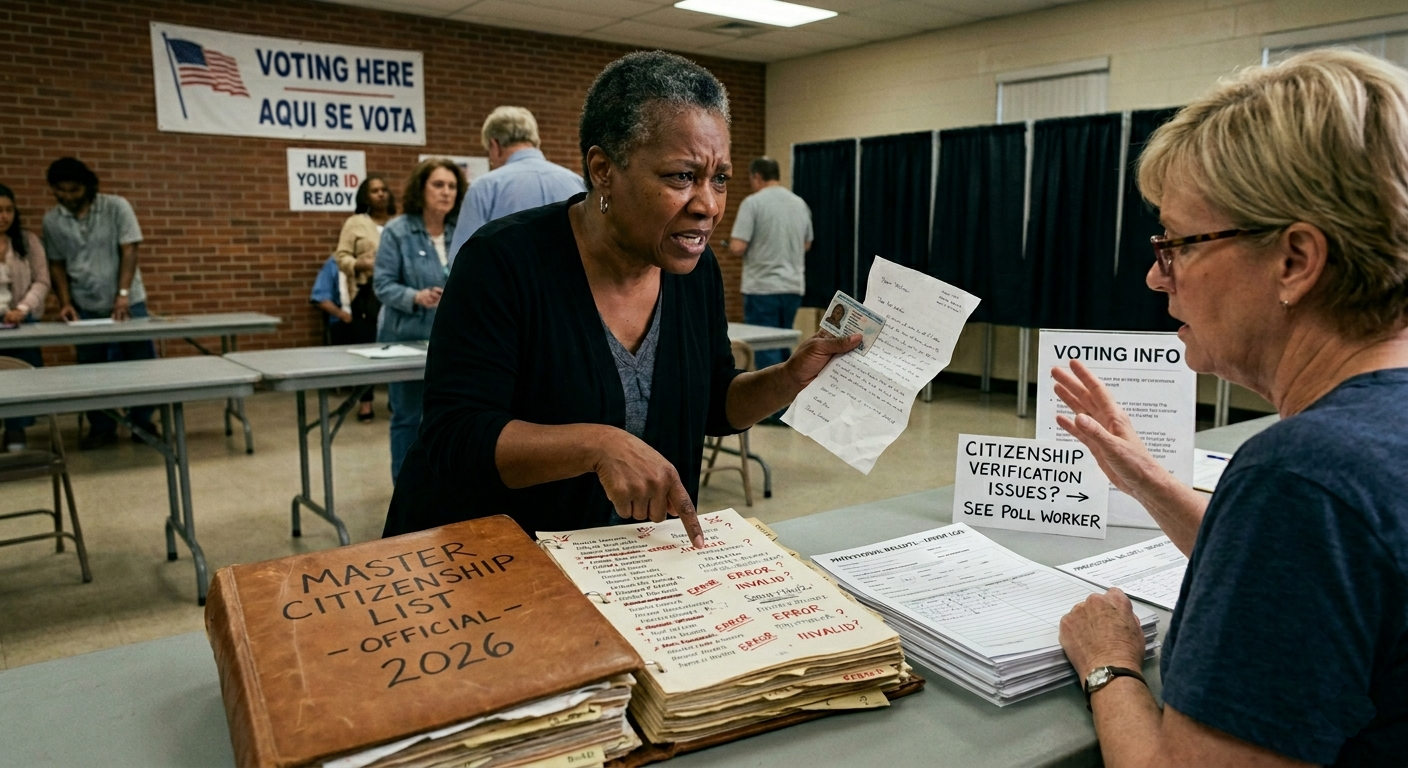
The most immediate threat lies in the administration’s mandate for the Department of Homeland Security (DHS) to compile a real-time national voter list of “confirmed citizens.” While framed as a measure for “election integrity,” this initiative is a logistical and constitutional minefield.
The federal databases being tapped for this project, primarily from the Social Security Administration and DHS, were never designed to track the voting status of every American in real time.
The data are inherently fragmented and lagging. As a result, the list is doomed to exclude hundreds of thousands of eligible voters who have recently changed names, addresses, or status, but whose records haven’t been updated.
Currently you can go to your county registrar to correct errors. In the new scheme the correction would have to make it’s way through vast bureaucracy of the federal government. Good luck. By overriding state-maintained rolls with an error-prone federal master list, the government is systematically disenfranchising eligible voters based on administrative shortcomings.
Furthermore, as Senator Mark Warner has noted, consolidating our election infrastructure into a centralized federal database creates an irresistible target for foreign adversaries. Instead of needing to breach fifty separate state systems, a hacker would only need to compromise one.
Nationalizing the election process under executive control violates the Tenth Amendment. The administration is not “regulating” the manner of elections, but rather seizing the machinery of state government to enforce a federal agenda. It is abandoning the checks and balances that have protected the ballot box for centuries.
To “save” the election process by centralizing it is to destroy the very local accountability that makes it secure. We cannot allow the Department of Homeland Security to create a fatally flawed master list that will inevitably deny the vote to qualified citizens.
The USPS executive order and its status in the courts
In March 2026, President Trump signed a second election-related executive order that took this scheme a step further by conscripting the U.S. Postal Service into the effort. The order directed DHS and the Social Security Administration to compile a nationwide “State Citizenship List” of adults verified as citizens, and it instructed USPS to withhold delivery of mail-in and absentee ballots to any voter not on a state list that had first been submitted to, and approved by, the federal government. Postmaster General David Steiner told Congress in June that the agency intended to comply and would refuse to deliver ballots in states that declined to hand over their voter rolls.
Courts have so far rejected this plan on two separate fronts:
Talwani v. Trump (D. Mass.): Twenty-three states and the District of Columbia sued to block the order. On June 25, 2026, U.S. District Judge Indira Talwani ruled that the president has no constitutional or statutory authority to create a centralized federal list of citizens or to dictate who receives a mail ballot, writing that “no law enacted by Congress delegates authority to control mail-in voting to USPS.” She enjoined enforcement of those provisions against the plaintiff states for the 2026 election, while dismissing claims about future elections as not yet ripe.
NAACP enforcement action (D.D.C.): Separately, the NAACP asked the federal court in Washington to enforce a 2021 settlement in which USPS agreed to safeguard mail-in voting through 2028. On July 1, 2026, Judge Emmet Sullivan ruled that USPS’s proposed rulemaking violated that settlement and blocked the agency from moving forward with it.
The administration is not backing down. USPS has formally notified the court that it will appeal the Sullivan ruling to the D.C. Circuit and has asked for a stay so it can keep building the ballot-verification system (including a web portal for states to upload voter lists) while the appeal proceeds. The White House has likewise signaled it will appeal the Talwani ruling, with a spokeswoman saying the administration is “confident that we will ultimately prevail.” In its own court filings, USPS effectively conceded it is behind schedule to have the system ready before the November midterms.
For now, both rulings remain in effect: USPS cannot condition ballot delivery on a federally approved voter list, and DHS and SSA cannot stand up the citizenship list the order envisioned. But with appeals pending in two separate courts and the midterms approaching, the legal fight over federal control of mail voting is far from over.